
T: +86-512-86871686
P: +86-13814898700
P: +86-13814898700
No.639 Yuanxin Road, Taoyuan Town, Wujiang, Suzhou, Jiangsu, China
Views: 0 Author: Site Editor Publish Time: 2026-06-03 Origin: Site
Producing compliant safety wear begins at the molecular level. A garment’s ability to protect against flash fires or arc flashes relies fundamentally on the raw materials used before weaving or knitting. Relying on post-production chemical treatments often leads to unpredictable wash lifespans. They compromise mechanical strength and raise severe wearer toxicity concerns over time. You introduce dangerous safety variables into hazardous work environments when you depend solely on topical chemical dips.
Integrating purpose-engineered flame-retardant FUNCTIONAL YARN directly into the textile matrix solves this critical issue. It ensures consistent, verifiable protection from the very first thread. This structural integration forms an unbreakable thermal barrier. This article provides an evidence-based roadmap for technical designers and procurement teams. You will learn how to accurately evaluate, select, and integrate these advanced materials. We will guide you through maximizing durability, optimizing wearer comfort, and ensuring strict regulatory compliance without compromise.
Inherent vs. Treated: Inherent flame-resistant (IFR) yarns offer lifetime durability, whereas chemically treated alternatives risk degrading over successive wash cycles.
The L.O.I. Benchmark: A Limiting Oxygen Index (L.O.I.) of ≥ 26 is the critical threshold for a yarn to be considered self-extinguishing in atmospheric conditions.
Compliance Must Lead: Yarn selection must reverse-engineer the required end-garment standards (e.g., NFPA 2112, ISO 11612) to prevent costly late-stage testing failures.
Toxicity Matters: Halogen-free, OEKO-TEX® certified yarns are becoming mandatory to mitigate long-term wearer health risks.
Technical designers must establish a strict distinction between foundational materials before specifying any fabric. Industry professionals frequently use the terms "flame-resistant" and "flame-retardant" interchangeably. However, they represent completely different physical and chemical realities. Misunderstanding this difference often leads to catastrophic garment failures in the field.
Inherent flame-resistant (IFR) fibers hold protective properties directly within their permanent polymer structure. Advanced fibers like aramids and modacrylics modify the actual combustion chain reaction at a molecular level. They utilize tight aromatic ring structures to absorb massive amounts of thermal energy. They do not melt. They do not support a flame once you remove the external heat source. While they require a higher upfront investment, they yield permanent protection. You cannot wash out or wear away this intrinsic defense mechanism.
Conversely, chemically treated yarns rely heavily on topical applications. Manufacturers treat standard combustible fibers, like ordinary cotton, using phosphorus or nitrogen-based solutions. These applied chemicals force the fiber to form a protective carbon char upon rapid heating. You face severe hazards if you do not properly engineer the underlying matrix. Blending treated cotton carelessly alongside standard synthetic fibers introduces a high risk of melting and dripping. Liquid polymer drips adhere directly to human skin. This causes secondary burns far more severe than the initial fire exposure.
The Limiting Oxygen Index (L.O.I.) serves as your primary objective evaluation metric. This index defines the minimum oxygen concentration required to actively support combustion. Normal atmospheric oxygen sits at approximately 21%. Therefore, a reliable FUNCTIONAL YARN must feature an L.O.I. strictly greater than 26. This technical threshold guarantees reliable self-extinguishing capabilities in real-world atmospheric environments.
| Property | Inherent Flame-Resistant (IFR) | Chemically Treated (FR-Treated) |
|---|---|---|
| Protection Mechanism | Molecular polymer structure (Intrinsic) | Topical chemical coating (Extrinsic) |
| Wash Durability | Permanent (Lasts the lifetime of the garment) | Degrades over successive industrial wash cycles |
| Melting/Dripping Risk | Zero risk (Chars and degrades gracefully) | High risk if blended improperly with synthetics |
| Typical L.O.I. Range | 28 to 32+ (Highly self-extinguishing) | 22 to 26 (Marginally self-extinguishing) |
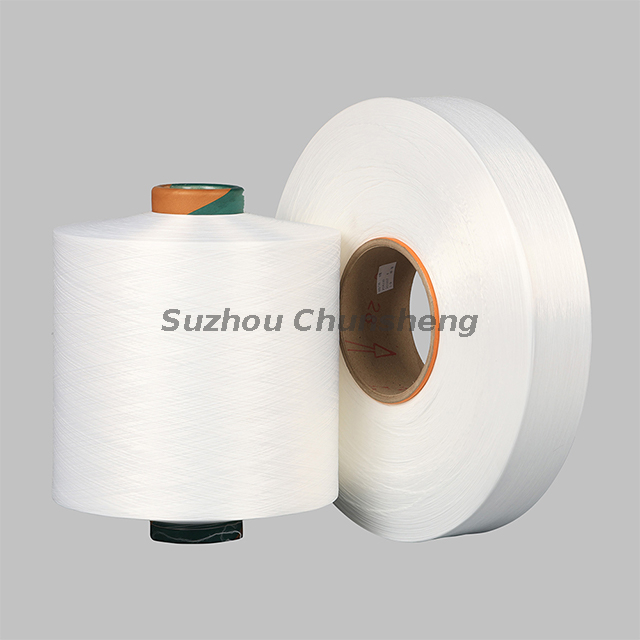
How a manufacturer engineers a FUNCTIONAL YARN directly dictates its field performance. We must closely evaluate the integration methods utilized during the initial polymer extrusion process. Copolymerization represents the gold standard for structural integrity. This advanced process permanently embeds flame-retardant chemical monomers directly into the backbone of the polymer chain. It ensures a perfectly even distribution of protective agents throughout the entire fiber volume. Copolymerization entirely avoids the chemical migration issues common with basic additive blending. Additives often leach out over time, leaving microscopic vulnerabilities in the thread.
Advanced nanocomposite modifications push these thermal boundaries even further. Material scientists now introduce extremely minor loads of specific nanomaterials into the yarn base. Adding just three to five percent of layered double hydroxides (LDHs) or carbon nanotubes (CNTs) exponentially increases thermal resistance. These micro-inclusions create dense, impenetrable heat shields at a microscopic level. Surprisingly, these nanoparticles actually improve overall tensile strength. They reinforce the polymer matrix physically while blocking thermal energy transfer simultaneously.
Industrial safety wear cannot simply resist fire. Workers must comfortably wear these garments for exhausting eight-hour shifts. Multi-function stacking addresses the harsh realities of ergonomic garment design. You can intelligently blend flame-retardant fibers alongside specialized moisture-wicking or anti-static profiles. This strategic blending creates a multi-layered functional textile. You achieve comprehensive multi-hazard protection without relying on stiff, heavy chemical auxiliaries. Poorly designed protective gear frequently causes dangerous heat stress. Smart yarn blending ensures excellent breathability. It maintains strict thermal defenses while actively pulling sweat away from the body.
Passing rigorous garment-level certifications proves virtually impossible if your foundational materials remain unqualified. Many procurement teams experience devastating late-stage testing failures. They overlook their initial yarn specifications and attempt to fix compliance issues later. You must proactively map your FUNCTIONAL YARN choices to target regulations from the very beginning of the design phase.
Different industrial hazards require completely different physical testing criteria. You must align your raw material properties with these rigorous testing parameters to eliminate trial-and-error prototyping.
ISO 11612 & EN 469: These protocols act as the definitive global benchmarks for industrial heat and structural firefighting. They require testing against radiant, convective, and direct contact heat. Yarns must provide exceptional condensed-phase charring. The fabric must immediately form a robust physical carbon shield to protect the firefighter’s skin.
NFPA 2112: This represents the strictest North American standard for industrial flash fire protection. It focuses heavily on thermal shrinkage limits. Manufacturers test fabrics in ovens reaching 500°F (260°C). Your yarn cannot shrink, crack, or break open. Shrinkage exposes the wearer's bare skin directly to extreme thermal energy.
ASTM F1506: This standard specifically targets severe electrical arc flash hazards. It demands materials generating a high Arc Thermal Performance Value (ATPV). The fibers must absolutely not melt or ignite. They must absorb and dissipate intense, instantaneous radiant heat bursts caused by electrical explosions.
| Safety Standard | Primary Hazard Focus | Crucial Yarn Requirement |
|---|---|---|
| ISO 11612 | Industrial Heat / Fire | Strong condensed-phase charring |
| NFPA 2112 | Flash Fire Exposure | Minimal thermal shrinkage (<10%) |
| ASTM F1506 | Electrical Arc Flash | Zero melting; High energy absorption |
Corporate buyers increasingly express deep skepticism regarding continuous chemical exposure in safety wear. Legacy chemical issues continually plague the protective apparel industry. The historic overuse of polybrominated diphenyl ethers (PBDEs) and highly toxic halogen-based retardants created a "toxic clothing" stigma. Workers rightly demand uncompromised protection from fires. However, they refuse to face long-term health hazards caused by their own safety uniforms. Heavy sweating opens skin pores. This natural biological process accelerates the transdermal migration of toxic chemical coatings.
The industry actively shifts toward environmentally benign material solutions. Strict halogen-free requirements drive modern textile innovation. Advanced phosphorus-nitrogen intumescent systems and inherent molecular safety profiles replace outdated toxic coatings. These modern formulations provide superior thermal resistance. More importantly, they never leach harmful endocrine-disrupting compounds into the human body or the local water table during laundering.
Skin-safe verification remains non-negotiable for any premium FUNCTIONAL YARN. You must ensure your chosen materials meet rigorous REACH compliance globally. Furthermore, securing OEKO-TEX® Standard 100 (Classes II or III) certification proves absolutely essential. This certification guarantees chemical safety during prolonged, direct skin contact. It also ensures significantly low smoke toxicity. If a catastrophic fire does occur, the burning yarn must not emit poisonous off-gassing. This low-smoke profile proves especially vital for personnel operating inside confined-space scenarios, such as underground mining or submarine maintenance.
Sourcing the correct protective materials requires a structured, highly analytical approach. Procurement teams cannot simply buy the cheapest chemically treated fabric and expect compliance. Follow these actionable steps to evaluate and implement your FUNCTIONAL YARN successfully across your entire organizational supply chain.
Step 1: Threat Profiling and Scenario Mapping: First, rigorously analyze the exact physical hazards your specific workforce faces daily. Different threats demand entirely different fiber architectures. Do your workers encounter sudden flash fires in refineries? Do they face heavy molten metal splash in steel foundries? Or do they risk electrical arc flashes in utility maintenance? Specific threats demand specific fibers. For example, specialized wool-synthetic blends naturally prevent molten aluminum adhesion. High-performance aramids aggressively resist high-temperature degradation during prolonged flash fires.
Step 2: Wash-Cycle Degradation Modeling: You must evaluate long-term mechanical performance based strictly on industrial laundering frequency. Treated cotton often presents an attractive initial purchase price. However, chemical coatings physically degrade after fifty to one hundred intense industrial washes. Harsh detergents and high-heat drying strip away topical protections. Inherent functional yarns maintain their molecular fire resistance forever. Project the fabric's physical integrity across its entire expected lifecycle. High-laundering environments heavily favor intrinsic fibers for sustained, measurable safety. Testing against ISO 6330 washing standards provides clear visibility into long-term fiber survival.
Step 3: Prototyping and Seam Strength Validation: A frequent and catastrophic implementation failure involves utilizing standard polyester sewing threads on heavy flame-retardant fabrics. The main fabric might brilliantly survive the thermal event. However, standard seams will instantly melt and burst open under heat stress. This failure immediately exposes the wearer to direct flames. You must strictly match the fabric’s foundational yarn with equivalent high-strength, inherently flame-resistant sewing threads. This meticulous matching prevents complete structural failure. It maintains the garment's protective envelope during a severe thermal emergency.
Integrating flame-retardant functional yarn represents a highly strategic risk-management decision. You must carefully balance complex thermal physics, rigorous mechanical durability, and strict human health standards. Your choice of raw fiber definitively dictates the ultimate survival of the wearer during a catastrophic event. Moving away from unstable chemical coatings toward inherent structural protection guarantees consistent, lifecycle-long safety.
Take these concise, action-oriented steps before commissioning your next production run:
Request detailed L.O.I. data sheets directly from your material suppliers to verify baseline self-extinguishing capabilities.
Demand verified wash-longevity test results to physically prove the fiber's lifetime durability under heavy industrial laundering.
Verify all OEKO-TEX® and REACH certifications to guarantee halogen-free, strictly non-toxic wear for your employees.
Build physical prototypes using matched flame-resistant sewing threads to validate full structural integrity under thermal stress testing.
A: Inherent (IFR) yarns never lose their protection. Their resistance exists permanently at the molecular level. Conversely, chemically treated yarns can severely degrade over time. Their longevity depends entirely on the chemical binding quality and the aggressiveness of industrial laundering. Frequent harsh washing physically strips away topical protective coatings.
A: Gas-phase retardancy interrupts the actual chemical chain reaction of the fire. It works by actively scavenging active radicals in the surrounding air. Condensed-phase retardancy functions purely physically. It forms a dense, robust carbon shield, or char layer, directly on the fabric surface. This layer blocks intense heat and oxygen from reaching the underlying fuel source.
A: Yes, provided they strictly utilize modern, halogen-free technology. You must verify they hold certification by independent bodies like OEKO-TEX®. Strict certifications ensure no toxic chemical migration occurs through human sweat or friction. Inherent fibers natively offer excellent skin-safe profiles without relying on hazardous topical chemicals.