
T: +86-512-86871686
P: +86-13814898700
P: +86-13814898700
No.639 Yuanxin Road, Taoyuan Town, Wujiang, Suzhou, Jiangsu, China
Views: 0 Author: Site Editor Publish Time: 2026-08-18 Origin: Site
In commercial and residential textile manufacturing, selecting the correct polymer filament dictates the lifespan, aesthetic retention, and production efficiency of the final product. Procurement managers and textile engineers face a continuous trade-off between material cost, dye affinity, and structural resilience. This challenge is particularly evident when specifying materials for high-traffic environments, luxurious home styling, or large-scale flooring projects. Evaluating Nylon 6 BCF Yarn requires a strict analysis of its extrusion properties, chemical composition, and performance metrics compared to alternatives like Nylon 6,6. This guide details the technical parameters necessary for qualifying this material for industrial production.
Definition & Structure: Nylon 6 BCF (Bulk, or Bulked, Continuous Filament) yarn is a synthetic polyamide produced via a continuous extrusion and texturizing process, engineered specifically to provide volume and coverage in textile applications.
Primary Advantage: Nylon 6 offers superior dyeability and a lower melting point compared to Nylon 6,6, allowing for more efficient processing and vibrant, consistent color yields.
Core Applications: It is the industry standard for residential carpets, commercial flooring, and automotive interiors due to its high abrasion resistance and elastic recovery.
Procurement Consideration: When sourcing Nylon BCF yarn, evaluating denier/dtex ranges, additive compatibility (e.g., UV stabilizers, antioxidants), and batch-to-batch consistency is critical for minimizing manufacturing defects.
Nylon 6 is synthesized from a single monomer known as caprolactam. This ring-opening polymerization creates a distinct molecular chain. The single-monomer ring structure differs fundamentally from dual-monomer polyamides like Nylon 6,6. This specific arrangement gives Nylon 6 its unique thermal and mechanical behavior. It offers lower crystallinity and a more open molecular framework. This open structure allows dye molecules to penetrate deeply and bond securely within the polymer matrix. Engineers favor this composition when color consistency and processing efficiency matter more than extreme thermal resistance. The molecular weight distribution during polymerization directly impacts the final yarn's tensile strength and extrusion stability. Plant operators monitor the relative viscosity (RV) of the polymer chips, typically targeting an RV between 2.4 and 2.7 for optimal carpet yarn extrusion.
Producing Bulk Continuous Filament Yarn relies on a highly controlled continuous extrusion process. Raw nylon 6 chips are dried thoroughly in vacuum hoppers to remove ambient moisture, bringing moisture content below 0.05%. They enter a heated extruder where thermal energy and mechanical friction from the screw melt the polymer at temperatures typically between 250°C and 270°C. A precision metering pump forces the molten nylon through heavy metal spinnerets. These plates contain hundreds of microscopic capillary holes, often engineered with trilobal or delta cross-sections to enhance the fiber's dirt-hiding capabilities.
The extruded filaments solidify immediately upon hitting precisely controlled cool air in the quench chamber. Cross-flow or radial quench systems dictate the cooling rate, which directly affects the orientation of the polymer chains. Spin finishes are applied via kiss rolls or metering pumps at this stage to reduce static electricity and lower friction. From here, the filaments pass directly into the drawing and texturizing phases. This single-step process maximizes production speed and ensures structural uniformity across the entire yarn bundle.
Not all supply chains utilize a single-step spin-draw-texturize line. Some manufacturers produce Partially Oriented Yarns (POY) as an intermediate material. POY undergoes only partial mechanical drawing during the initial extrusion phase, typically wound at speeds between 2500 and 3000 meters per minute. This leaves the molecular chains somewhat unaligned and highly extensible. Facilities ship POY to specialized downstream processors. These secondary plants perform the final drawing, heating, and texturizing steps. This decoupled approach allows for specialized custom finishes and unique crimp profiles. It gives textile mills the flexibility to adapt the yarn for niche applications without bearing the capital expense of running full-scale melt extrusion lines. Storage of POY requires strict temperature and humidity controls to prevent premature aging or crystallization before the final texturizing step.
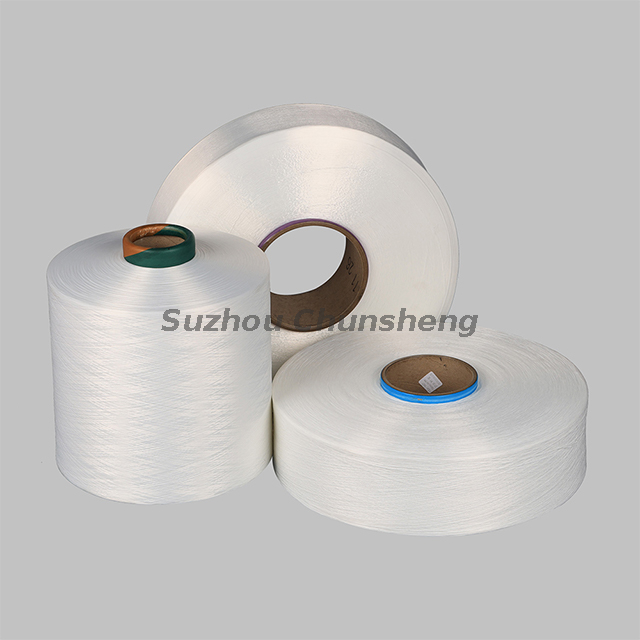
Texturizing transforms flat, smooth yarn into a high-volume material suitable for tufting and weaving. Flat nylon filaments lack the bulk needed for adequate carpet coverage. During texturizing, hot air or pressurized steam forces the filaments into a confined stuffer box. This thermal and mechanical action introduces a permanent, three-dimensional crimp. The crimped structure traps air and dramatically increases the yarn's apparent volume. Operators monitor stuffer box pressure and fluid temperature to control the crimp contraction percentage.
Intermingling jets then create entanglement nodes, locking the filaments together to prevent fraying during downstream processing. The number of nodes per meter is a strict quality control metric. Bulk provides the plush, luxurious feel required in residential carpets. It also ensures dense, opaque coverage in commercial flooring without requiring excessive raw material weight.
Industry standards measure filament thickness in denier (den) or decitex (dtex). Denier represents the weight in grams of 9,000 meters of yarn, while decitex represents the weight of 10,000 meters. A common range for individual filaments falls between dtex 44–220 or den 40–200. Total yarn bundles often reach 1100 to 2800 dtex for carpet knitting. Filament thickness directly correlates to the end-product's weight, density, and durability. Heavier deniers resist crushing in high-traffic zones. Finer deniers create softer, more pliable textures for luxury residential markets. Selecting the precise dtex ensures the tufting machinery operates efficiently without breaking filaments or jamming the needles.
Typical Dtex Configurations by Application
| Application Type | Typical Total Dtex | Filament Count | Primary Characteristic |
|---|---|---|---|
| Luxury Residential Saxony | 1100 - 1400 | 68 - 100 | High softness, fine hand feel |
| Commercial Loop Pile | 2000 - 2400 | 120 - 144 | Dense coverage, crush resistance |
| Automotive Floor Mats | 2400 - 2800 | 140 - 160 | Extreme abrasion resistance |
| Hospitality Broadloom | 1800 - 2200 | 100 - 130 | Balance of bulk and durability |
Tensile strength defines the yarn's ability to withstand elongation before breaking, typically measured in grams per denier (g/d). Standard carpet-grade nylon 6 exhibits a tenacity between 2.5 and 3.5 g/d, with an elongation at break of 30% to 50%. Elastic recovery measures how well the polymer returns to its original shape after mechanical deformation. Nylon 6 excels in elastic recovery. When compressed by heavy furniture or continuous footsteps, the crimped filaments bounce back. This prevents permanent matting and structural crushing. High tensile strength also prevents yarn breakage during high-speed tufting, reducing machine downtime, minimizing material waste, and keeping production schedules on track.
Friction-wear properties dictate the functional lifespan of any flooring product. Nylon 6 offers exceptional abrasion resistance. The tough, flexible polymer chains withstand repeated scuffing, scraping, and grinding. Floor mats in vehicles endure constant, localized grinding from driver footwear. Commercial carpets face rolling office chairs, heavy carts, and dense foot traffic. The high abrasion resistance of this yarn prevents premature fiber loss. Manufacturers validate this performance using rigorous industry wear tests, such as the Vetterman drum test or the Hexapod tumbler test, ensuring the textile maintains its visual integrity and structural density over years of rigorous use.
Nylon 6 has a melting point of approximately 220°C. While lower than some alternative polyamides, it remains perfectly adequate for standard textile manufacturing and end-use applications. This lower melting point actually reduces energy consumption during extrusion and downstream heat-setting processes. Heat setting, typically done via Superba saturated steam systems at 125°C to 135°C, locks the twist into the yarn for cut-pile carpets.
Moisture regain is another vital metric. Nylon 6 is hygroscopic, meaning it absorbs moisture from the surrounding air. At standard conditions, its moisture regain is around 4.0% to 4.5%. This influences the manufacturing environment. Facilities must tightly control ambient humidity to prevent dimensional changes or tension variations during tufting. For end-users, moisture absorption can affect stain resistance, making topical anti-stain treatments and fluorocarbon coatings a standard requirement for finished carpets.
Comparing the polymer chain structures reveals distinct mechanical behaviors. Nylon 6,6 utilizes two monomers: hexamethylenediamine and adipic acid. This dual-monomer synthesis creates a tighter, more highly crystalline molecular structure with a higher density of hydrogen bonds. It is marginally stiffer and has a higher melting point, reaching approximately 260°C. Nylon 6, formed from a single monomer, features a more open and flexible molecular arrangement. This openness provides better pliability and a softer hand feel. The structural difference dictates how each material responds to heat, mechanical stress, and chemical treatments during processing. Engineers must weigh these molecular traits against the specific demands of the final textile product.
The dyeability trade-off heavily favors Nylon 6. Its open molecular structure and lower glass transition temperature (Tg) allow it to accept acid dyes and pre-metallized dyes much more readily than Nylon 6,6. Dye molecules penetrate deeper and faster into the polymer matrix at lower dye bath temperatures. This results in significantly lower energy costs and shorter cycle times during the dyeing process. Facilities can achieve deeper color penetration, highly vibrant shades, and excellent uniformity. Colorfastness remains excellent when the dyes are properly fixed and pH levels in the dye bath are strictly controlled. For projects requiring complex printed patterns, custom color matching, or brilliant, saturated hues, this superior dye affinity makes Nylon 6 the preferred choice.
Evaluating overall value requires a strict framework. The premium price for Nylon 6,6 is justified for extreme industrial webbing, heavy-duty tire cords, or automotive airbags where maximum thermal resistance and absolute rigidity are non-negotiable. However, Nylon BCF Yarn is the more cost-effective, high-performance choice for broadloom carpeting, carpet tiles, and luxurious home styling. It delivers the necessary abrasion resistance and elastic recovery at a lower raw material cost. The reduced energy requirements for extrusion, heat-setting, and dyeing further improve its cost-to-performance ratio, maximizing margins for textile manufacturers.
Nylon 6 vs. Nylon 6,6 Technical Comparison
| Property | Nylon 6 | Nylon 6,6 |
|---|---|---|
| Monomer Base | Single (Caprolactam) | Dual (Hexamethylenediamine & Adipic Acid) |
| Melting Point | ~220°C | ~260°C |
| Dye Affinity | Excellent (Fast, deep penetration) | Moderate (Requires more energy/time) |
| Elastic Recovery | Very High | High |
| Flexibility & Softness | Superior | Stiffer, more rigid |
| Manufacturing Energy Cost | Lower | Higher |
Success criteria for flooring include crush resistance, stain resistance, and aesthetic longevity. BCF yarn provides the necessary bulk to maximize floor coverage with less raw material weight. This efficiency makes it ideal for both high-traffic contract spaces and luxury residential markets. The permanently crimped structure hides dirt, diffuses light, and resists matting under heavy furniture. Homeowners demand soft textures, vibrant colors, and easy maintenance. Commercial property managers prioritize durability, acoustic dampening, and ease of cleaning. Nylon 6 meets both demands through its precise combination of texturized bulk, superior dyeability, and robust elastic recovery. Tufting setups for these applications vary widely, utilizing 1/8 or 1/10 gauge machines to achieve the desired face weight and pile density.
Automotive textiles face stringent OEM requirements. Materials must resist UV degradation, withstand extreme temperature fluctuations inside the cabin, and offer ease of cleaning. Floor mats endure concentrated, repetitive abrasion from driver footwear. Nylon 6 BCF meets these harsh standards when properly compounded with UV stabilizers and antioxidants. Its high tensile strength prevents fiber shedding and fuzzing. The material's resilience ensures the molded carpet maintains its original appearance and structural integrity despite years of daily friction and exposure to dirt, moisture, and automotive fluids. The yarn also responds well to the thermal molding processes used to shape floor pans to the vehicle's chassis.
Hospitality venues, airports, and corporate environments demand flooring that can handle thousands of footsteps daily. Nylon 6 performs exceptionally well in these demanding settings. The focus here is on long-term appearance retention and lifecycle costs. Hotels and offices require carpets that do not "ugly out" before they physically wear out. The elastic recovery of the yarn prevents traffic lanes from flattening and looking worn. Its ability to hold deep, rich colors hides ambient soil effectively. Manufacturers often incorporate conductive filaments into the yarn bundle for these applications to provide permanent static control, a strict requirement for office environments with heavy electronic equipment usage.
Compounding raw materials with additives during the spinning process is necessary to meet specific performance regulations. Standard additives include antioxidants to prevent thermal degradation during extrusion, metal salt catalysts to speed polymerization, and dispersants for uniform color distribution in solution-dyed variants. Titanium dioxide (TiO2) is frequently added as a delusterant to reduce the natural shine of the polymer, creating matte finishes. Advanced integrations push the material's capabilities further. Manufacturers can incorporate antimicrobial agents directly into the polymer melt for healthcare environments. Some specialized hospitality textiles even utilize plant aromatic microcapsules for long-lasting odor control. These additives must be carefully balanced and metered through masterbatch dosing systems to avoid compromising the yarn's tensile strength or extrusion stability.
Integrating this yarn into existing machinery requires precise calibration. Tufting machines, texturizers, and drawing equipment must align with the yarn's specific denier, crimp level, and elongation properties. Tension control at the creel is critical. Excessive tension during tufting can pull the crimp out of the yarn, drastically reducing carpet bulk and coverage. Inadequate tension causes loops, missed stitches, and machine jams. Facilities must adjust their heat-setting parameters to accommodate the 220°C melting point without causing thermal degradation. Proper air-splicing techniques ensure continuous runs without weak joints breaking under high-speed manufacturing stresses.
Procurement pitfalls can easily derail production schedules. Inconsistent dye lots are a major risk. If the raw caprolactam quality varies, the resulting yarn will absorb dye differently, causing visible banding or streaking (barré) in finished carpets. Batch-to-batch consistency in texturizing is equally important; variations in crimp level alter the carpet's final density and pile height. Auditing manufacturers for continuous extrusion quality control is non-negotiable. Poorly maintained spinnerets lead to broken filaments. These broken filaments create fuzzy textures, weaken the overall yarn bundle, and cause excessive lint buildup on tufting needles.
Engineers must request detailed technical data sheets (TDS) before approving any new supplier. Conduct pilot tufting runs to evaluate how the yarn behaves under actual machine tension and speed. Test the finished samples for dye uptake, abrasion resistance, and elastic recovery in the lab. Verifying ISO certifications ensures the supplier maintains strict quality management systems and consistent raw material sourcing. Establish clear tolerance limits for denier variation, crimp contraction, and moisture content in the procurement contract. Implement strict incoming quality control checks, including tensile testing and visual inspection of the yarn cones, to protect the manufacturing line from costly downtime.
Request sample cones from the supplier to conduct pilot processing trials, verifying tufting machine compatibility and creel tension tolerances.
Review specific denier, dtex, and filament count requirements with your engineering team to optimize the target carpet face weight and pile density.
Consult with suppliers on custom masterbatch additive formulations, such as UV stabilizers, TiO2 delusterants, or antimicrobial agents, to meet specific industry regulations.
Establish strict quality control parameters in the procurement contract for batch-to-batch dye affinity, crimp contraction consistency, and moisture regain limits.
Audit the supplier's extrusion facilities to verify ISO certifications and ensure proper maintenance of spinnerets and texturizing equipment.
A: BCF stands for Bulk (or Bulked) Continuous Filament. It refers to a synthetic yarn produced in a continuous strand and mechanically textured to add volume, crimp, and bulk, making it ideal for carpet manufacturing.
A: Bulk Continuous Filament yarn consists of long, continuous strands extruded directly into yarn, whereas staple yarn is made by cutting filaments into shorter lengths and spinning them together. BCF generally sheds less and offers higher tensile strength.
A: Nylon 6 has a more open molecular structure, which allows it to absorb dyes more rapidly and evenly than Nylon 6,6. This results in more efficient manufacturing, lower dyeing costs, and highly vibrant colors suitable for luxury and commercial styling.
A: Yes, Nylon 6 can be depolymerized back into its base monomer (caprolactam) and spun into new yarn without a loss of quality, making it highly suitable for circular economy initiatives and sustainable product lines.
A: While specific requirements vary by application, industrial Nylon 6 BCF typically ranges from 40 to 200 denier (or 44 to 220 dtex) per filament, with total yarn bundles often ranging from 1000 to 3000 denier depending on the required carpet weight and density.
A: Nylon 6 is hygroscopic, meaning it absorbs moisture from the environment. Manufacturers must carefully control ambient humidity during storage and processing to prevent dimensional changes or variations in tensile properties.